Artificial Turf vs Natural Grass: Pros, Cons & Key Differences
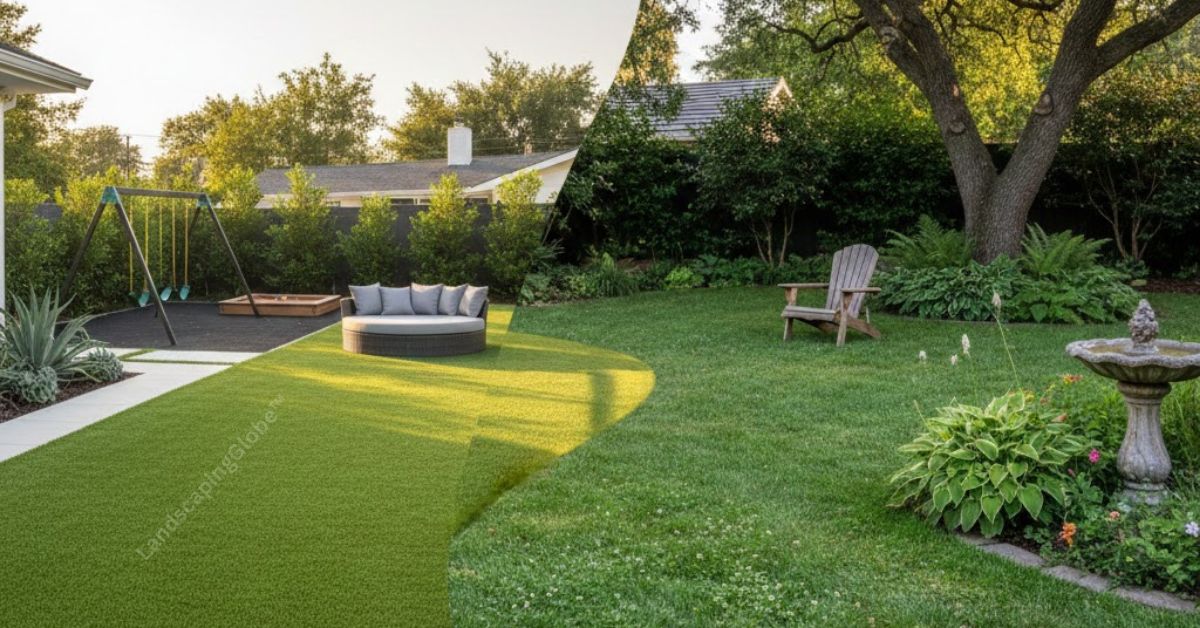
Artificial turf provides low maintenance, high durability, and water conservation, making it perfect for high-traffic areas with kids and pets. Installing artificial turf costs more upfront but saves money long-term on mowing, watering, fertilizing, and other yard care tasks.
The surface of artificial grass can get extremely hot, sometimes like asphalt, and may contain PFAS, lead, VOCs, and microplastics. Natural grass offers ecological benefits, such as air quality improvement, cooling effects, and supports biodiversity, creating a soft and healthy lawn.
Growing natural grass requires regular watering, mowing, fertilizing, and pest control, and can develop bare spots or mud under heavy use. Artificial turf lasts over 15 years, stays green year-round, and withstands heavy use, but lacks the natural feel, smell, and cooling effect.
Choosing between turf and natural grass depends on whether water savings, durability, and low upkeep or eco-friendliness and natural comfort are more important. Studies show natural grass fields are softer and safer for sliding and athletic activities, while synthetic surfaces can be hotter and firmer.
Cost comparisons indicate synthetic turf may save money on maintenance, but natural grass is cheaper to install initially despite higher upkeep costs.
Key Differences Between Artificial Turf and Natural Grass
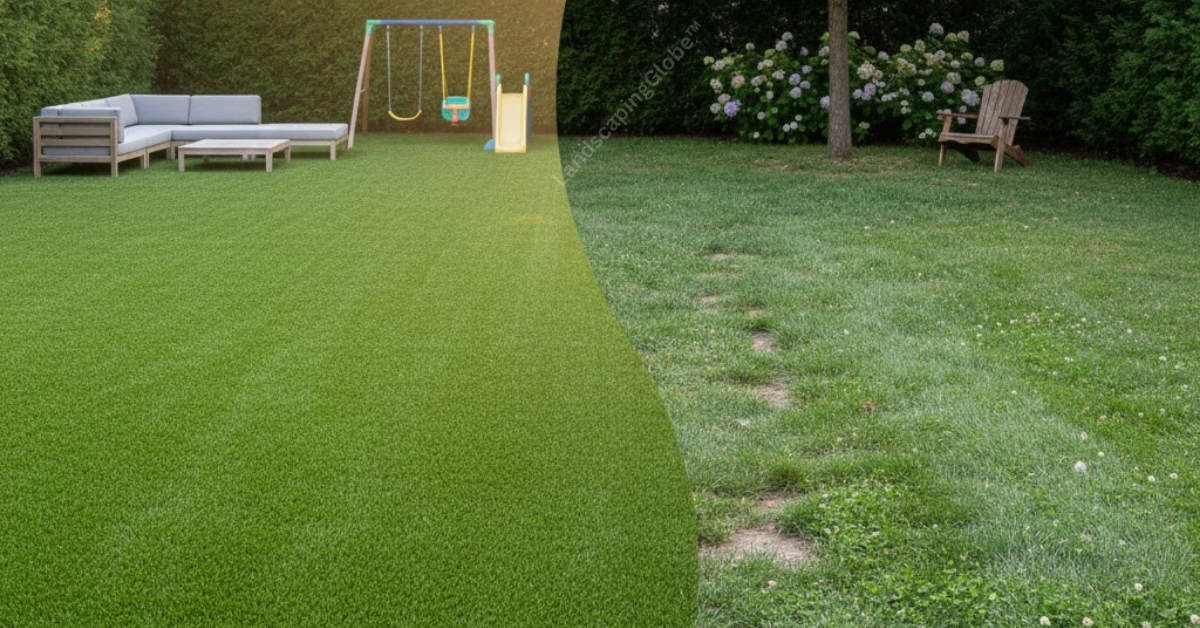
Durability and Performance in High-Traffic Areas
Artificial turf is extremely durable, resisting wear and tear, soil compaction, mud puddles, and staying green even with heavy foot traffic or pets.
Natural grass, while cooler and softer, can develop bare spots, mud puddles, and experience erosion or damage in high-traffic areas. Sports and playground areas often use artificial turf because it maintains a consistent, firm surface, reducing recovery time compared to natural grass fields.
High temperatures make artificial turf hotter than natural grass, sometimes reaching levels similar to asphalt, affecting comfort and playability in sunny conditions. Even with heavy use, artificial turf provides a safe, even, and resilient surface, while natural grass needs recovery periods to avoid damage or thinning.
Environmental Impact and Sustainability
Artificial turf conserves water, requiring none for irrigation, but is made from polyethylene, polypropylene, or nylon, which are non-biodegradable and release microplastics. Natural grass supports the ecosystem, helps cool the surrounding air, reduces carbon dioxide, and provides oxygen, promoting biodiversity and environmental health.
Chemicals in some artificial turf can contain VOCs, lead, and PFAS, raising health and environmental concerns compared to natural lawns. Growing natural grass demands water, fertilizers, and maintenance, which increases resource use, yet it avoids harmful synthetic materials found in artificial turf.
Artificial surfaces offer a consistent appearance and low maintenance, while natural grass offers eco-friendly, breathable, and temperature-regulating benefits, improving air and soil quality.
Cost Comparison: Installation vs Long-Term Upkeep
Installing artificial turf has a high upfront cost, ranging from $5–$15 per square foot, but reduces long-term expenses on water, mowing, and fertilizers. Natural grass has a lower initial cost, yet requires ongoing maintenance spending, including watering, cutting, fertilizing, and pest control, increasing long-term investment.
Artificial turf can last 10–15 years, saving money over time, while natural grass lasts indefinitely with continuous care and upkeep. Cost considerations include labor, irrigation, chemical applications, and repair for natural grass, versus installation and occasional cleaning for artificial turf.
Choosing between them depends on whether upfront affordability or long-term efficiency and durability is more important for your lawn management goals.
Benefits of Artificial Turf
Minimal Water Usage and Conservation Advantages
Artificial turf drastically reduces water usage, helping homeowners save on water bills, protect the environment, and support sustainable landscaping.
Consistent Appearance and Heavy Use Resilience
Synthetic grass stays green all year, resists heavy foot traffic, and remains perfect for athletic fields, pets, and play areas.
Low Upkeep and Long-Term Savings
Using artificial turf eliminates mowing, fertilizers, and pesticides, offering long-term savings and minimizing lawn maintenance efforts for busy homeowners.
Safety Considerations and Heat Retention
Artificial grass provides a cushioned surface, reduces allergens, protects children and pets, but may retain heat during sunny days.
Drawbacks of Artificial Turf
High Initial Installation Costs
Artificial turf has high initial costs, making installation expensive for homeowners, schools, and athletic fields, even with long-term savings.
Environmental Concerns: Microplastics and Chemicals
Synthetic grass can release microplastics, PFAS, and VOCs, harming soil, water, and wildlife, raising serious environmental concerns.
Reduced Natural Feel and Aesthetics
Artificial grass lacks the natural feel, seasonal color, and soft texture of real lawns, sometimes looking unnatural or artificial.
Benefits of Natural Grass
Ecological Benefits: Air Quality, Cooling, and Biodiversity
Natural grass improves air quality, reduces carbon dioxide, provides cooling, supports biodiversity, and filters stormwater, protecting soil and wildlife habitats.
Natural Look, Feel, and Comfort
Grass lawns offer a natural look, soft texture, comfort for walking, and a pleasant green aesthetic for homes, parks, and play areas.
Lower Installation Costs
Installing natural grass has lower initial costs than synthetic turf, making it affordable for homeowners, schools, and community recreational spaces.
Healthier for Pets and Play Areas
Natural turf provides a safe surface, absorbs impact for children, and supports pets, reducing allergens, bacteria buildup, and skin irritation risks.
Drawbacks of Natural Grass
Intensive Maintenance and Watering Needs
Natural grass requires frequent mowing, watering, fertilizing, and weeding, making it time-consuming, costly, and dependent on irrigation systems.
Vulnerability to Weather and Traffic Damage
Grass lawns are susceptible to drought, heavy rain, and foot traffic, causing muddy patches, erosion, and uneven surfaces in yards.
Higher Chemical Use and Environmental Stress
Maintaining natural turf often requires pesticides, herbicides, and fertilizers, which can pollute waterways, stress soil microbes, and harm wildlife habitats.
Choosing the Right Option for Your Space Step-by-Step
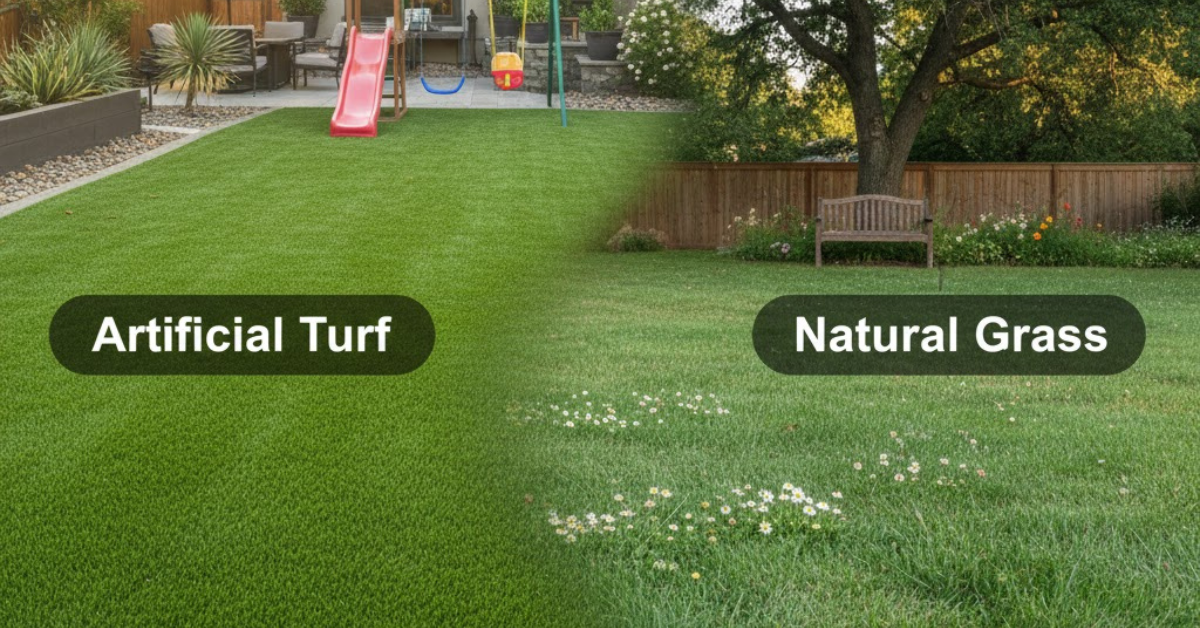
Step 1: Evaluate Your Usage Needs
- Decide if the area will face heavy foot traffic, sports use, or pet activities.
- If yes, consider artificial turf for durability and low-maintenance benefits.
Step 2: Consider Natural Aesthetics
- For gardens, residential lawns, or spaces that need air purification and biodiversity support, natural grass is best.
- This option gives a natural look, feel, and cooling effect.
Step 3: Assess Climate Conditions
- In drought-prone climates, artificial turf conserves water.
- In rainy or temperate areas, natural grass thrives and improves soil health.
Step 4: Calculate Budget and Costs
- Artificial turf has high initial installation costs but saves money on watering and mowing.
- Natural grass has lower installation costs but higher ongoing maintenance.
Step 5: Consider Lifestyle Factors
- Families with kids or pets might prefer artificial turf for safe, mud-free play areas.
- If you enjoy eco-friendly gardening and natural landscapes, choose natural grass.
Step 6: Make a Decision Based on Priorities
- Compare durability, maintenance, climate suitability, and budget.
- Pick the option that balances practicality with aesthetic and environmental goals.
Installation and Maintenance Tips
Preparing the Ground for Turf or Grass
- Proper soil preparation with grading, aeration, and leveling ensures durability, drainage, and healthy root growth for artificial turf or natural grass.
Seasonal Care and Longevity Tips
- Regular mowing, fertilization, watering, brushing, and debris removal improve turf longevity, maintain green appearance, and prevent pests and diseases.
Cost-Saving Measures Without Compromising Quality
- Installing efficient irrigation, high-quality infill, and seasonal maintenance tools reduces water bills, chemical use, and replacement costs while keeping lawns safe and lush.
FAQS
Which lasts longer in heavy-use areas, artificial turf or natural grass?
Artificial turf lasts longer and resists wear, mud, and high-traffic damage better than natural grass.
Does artificial turf get too hot for outdoor play?
Synthetic turf can absorb heat, making it unsafe for children, pets, and summer sports activities.
Is natural grass more eco-friendly than artificial turf?
Natural grass improves air quality, soil health, and biodiversity, but needs water and maintenance.
Which option saves more money over time?
Artificial turf reduces watering, mowing, and fertilizer costs, while natural grass requires ongoing lawn care expenses.
Which surface is safer for kids and pets?
Natural grass offers a softer, cushioned surface, reducing injury risk, while turf can cause friction burns.
Can artificial turf handle pets and heavy traffic?
Yes, synthetic turf is ideal for pets and high-traffic areas, staying green, mud-free, and durable year-round.