Fast-Growing Fish Species in Aquaculture Ponds for High Profit Farming
Fish Species That Grow Fast in Aquaculture Ponds
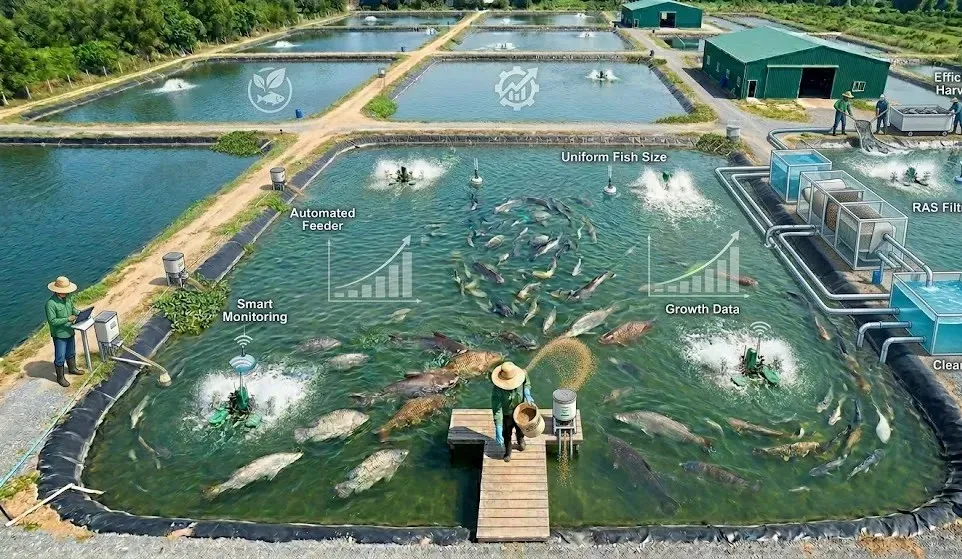
Fish farming works best with species that grow fast and sell quickly. In aquaculture ponds, farmers often raise tilapia (Oreochromis spp.), channel catfish (Ictalurus punctatus), carp (Cyprinus carpio), and barramundi (Lates calcarifer).
These fish reach market size in 8–12 months and perform well in warm water. They show strong feed conversion efficiency, so they gain more weight with less feed. Species like Pangasius (Pangasianodon hypophthalmus) and hybrid striped bass (Morone saxatilis × M. chrysops) also grow fast in high-density systems. Growth improves with proper water temperature, balanced stocking density, and high protein feed.
Some fish like trout (Oncorhynchus spp.) grow fast in cool water, while bluegill (Lepomis macrochirus) and largemouth bass (Micropterus salmoides) also give good results with proper care. The right species choice helps farmers get higher yield and better profit from aquaculture ponds.
Why Fast-Growing Fish Are Important for Aquaculture Success
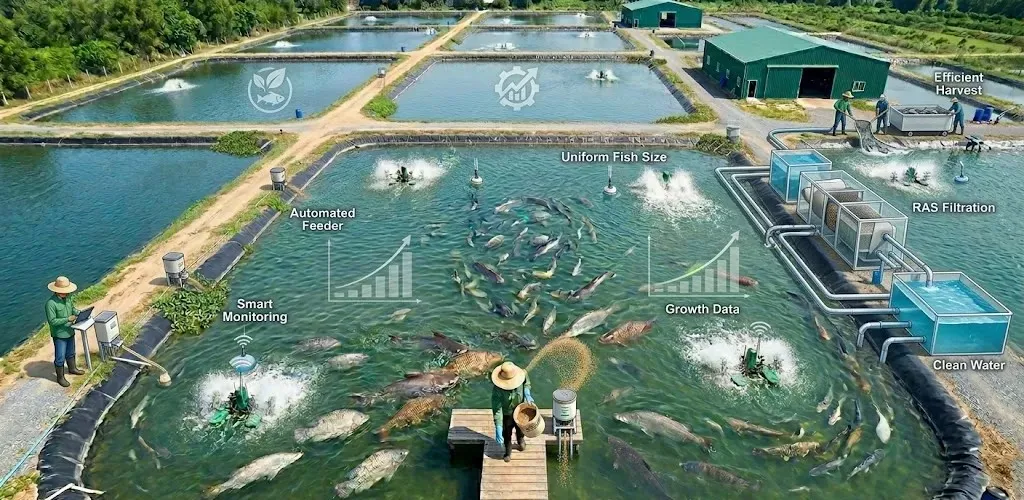
- Shorter Production Cycles: Fast growth helps fish reach market size quickly. Farmers can harvest more times in a year.
- Better Feed Conversion Efficiency: These fish use less feed for more weight gain. This reduces overall farming cost.
- Higher Yield and Output: Fast-growing fish increase total production. Farmers get more fish in less time.
- Faster Return on Investment: Quick growth means faster income. Farmers recover costs earlier.
- Improved Uniform Size: Fish grow at a similar rate. This reduces competition and stress in ponds.
- Higher Survival Rates: Healthy growth lowers fish deaths. This improves overall farm performance.
- Lower Water Pollution: Efficient feeding reduces waste. This keeps water cleaner in aquaculture systems.
- Supports Sustainable Aquaculture: Less waste and better growth help long-term farming success.
- Role of Selective Breeding: Programs improve growth in species like Atlantic salmon. Each generation grows better.
- Use of Monosex Populations: All-male groups like bluegill grow faster. This improves production efficiency.
- Advanced Recirculating Aquaculture Systems (RAS): These systems control water quality. They help maintain ideal growth conditions.
- Better Resource Management: Fast growth saves time, space, and feed. Farmers use resources more efficiently.
Factors That Affect Fish Growth in Aquaculture Ponds
- Water Quality: Good water supports fast fish growth. Low dissolved oxygen (DO) slows feeding. Stable temperature improves metabolism. Balanced pH (6.5–9.0) keeps fish healthy. High ammonia harms growth and survival. Clear water reduces stress and improves oxygen flow.
- Nutritional Intake: Quality feed controls growth speed. High protein food builds fish body faster. Balanced nutrients improve weight gain. Proper feeding avoids waste and pollution. Overfeeding and underfeeding both slow growth.
- Stocking Density: Too many fish reduce oxygen levels. Overcrowding increases stress and disease. Balanced density supports healthy growth.
- Genetic Potential: Some fish grow faster by nature. Good genetics improve survival and size. Farmers select fast-growing species.
- Pond Management: Proper pond depth supports stable conditions. Regular cleaning removes toxic waste. Good management improves overall fish health.
- Environmental Balance: Stable water conditions support steady growth. Poor balance reduces production and increases losses.
Top Fast-Growing Fish Species for Aquaculture Ponds
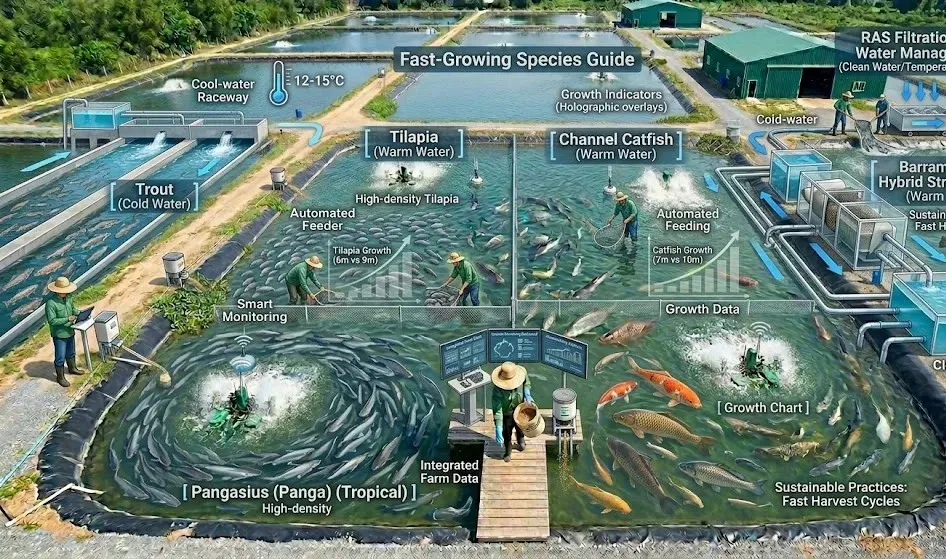
- Tilapia (Oreochromis spp.): Tilapia grows fast in warm water. It reaches market size in 6–8 months. It survives high density and low-quality feed.
- Channel Catfish (Ictalurus punctatus): Channel catfish is strong and fast-growing. It handles low oxygen and reaches harvest in 6–9 months.
- Carp (Cyprinus carpio): Carp adapts to many pond systems. It grows quickly and gives good yield in mixed conditions.
- Trout (Oncorhynchus spp.): Trout grows fast in cold, clean water. It needs high oxygen and quality feed.
- Barramundi (Lates calcarifer): Barramundi grows very fast in warm water. It gives high production in commercial farms.
- Pangasius (Pangasianodon hypophthalmus): Pangasius grows fast in intensive systems. It has high survival and strong output.
- Hybrid Striped Bass (Morone saxatilis × M. chrysops): This hybrid grows quickly. It works well in controlled pond systems.
Tilapia: The Most Popular Fast-Growing Aquaculture Fish
Tilapia (Oreochromis niloticus) is the most popular fast-growing fish in aquaculture. It grows quickly in warm freshwater and reaches harvest size in about 6–9 months. Farmers call it “aquatic chicken” because it adapts easily and survives in many pond conditions.
It performs well in pond systems, cages, and Recirculating Aquaculture Systems (RAS). It grows best in warm water around 25–32°C and uses low-protein feed, which reduces farming cost. Major producers include China, Indonesia, and Egypt. Improved strains like Genetically Improved Farmed Tilapia (GIFT) grow much faster than older types.
Tilapia also supports aquaponics and large-scale fish farming. However, it cannot survive cold water and may become invasive in some regions. Overall, it remains a top choice for fast production and high yield in aquaculture ponds.
Catfish: A Profitable and Fast-Growing Choice
Catfish (Ictalurus punctatus) is a fast-growing and profitable fish in aquaculture. It reaches harvest size in about 4–6 months with proper feeding. It survives low oxygen and harsh water conditions, which makes it easy to farm.
African catfish (Clarias spp.) and hybrid types grow even faster and give better yield. It works well in ponds, cages, and tarpaulin systems.
Catfish has strong market demand and can be sold as whole fish or fillets for higher profit. Good water quality, balanced feed, and healthy fingerlings improve growth and income.
Pangasius (Basa Fish): High Growth Rate and Market Demand
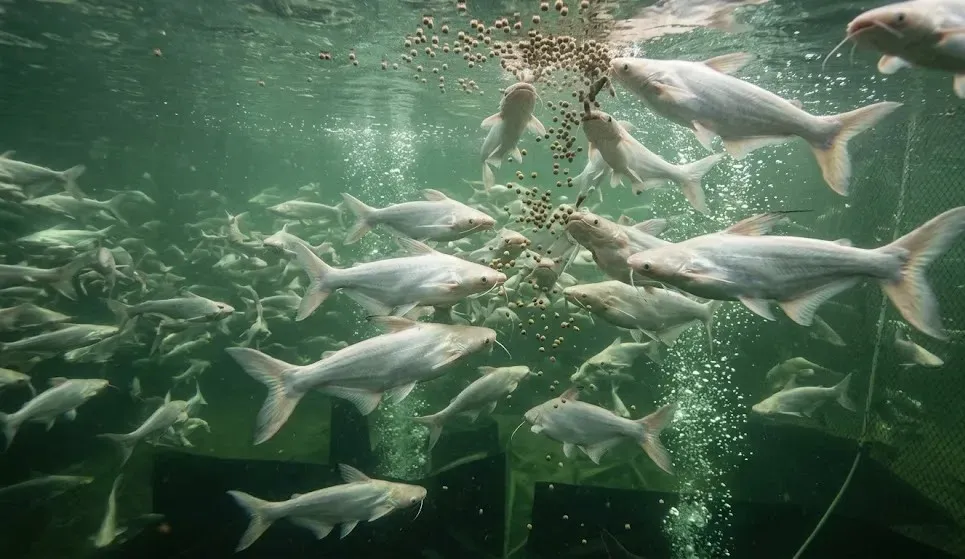
- Fast Growth: Pangasius hypophthalmus (Basa fish) reaches market size in 6–8 months. It supports quick harvest cycles in aquaculture ponds.
- High Density Farming: It survives well in crowded systems. It tolerates low oxygen water easily.
- Strong Market Demand: Pangasius has high demand in the U.S., Europe, and Asia. It is widely used as an affordable whitefish.
- Major Producer: Vietnam is the leading producer and exporter of Pangasius worldwide.
- Feed Efficiency: It has a low feed conversion ratio (FCR). This reduces feed cost and increases profit.
- Product Use: It is sold as fillets, frozen fish, and processed products like fish sticks.
- Economic Growth: The global Pangasius market is growing due to demand for low-cost protein.
- Sustainability: Modern farming uses better water control and sustainable practices for higher efficiency.
- Farming Advantage: It gives high yield in less time and supports commercial aquaculture success.
Barramundi: A Fast-Growing Premium Fish Species
Barramundi (Lates calcarifer) is a fast-growing premium fish in aquaculture. It reaches market size in about 6–12 months and produces high-quality white meat with a mild, buttery taste. It grows well in both freshwater and saltwater, which makes it suitable for cages and Recirculating Aquaculture Systems (RAS).
It has a strong feed conversion ratio (FCR 1.5–1.7), so farmers get better output with less feed cost. Barramundi is also rich in Omega-3 fatty acids and has low mercury levels, making it a healthy seafood choice.
Its global demand is rising due to its premium quality and sustainability. It also requires less fishmeal, which reduces environmental impact. Overall, Barramundi is a profitable and eco-friendly fish for modern aquaculture farming.
Trout: Fast Growth in Controlled Aquaculture Systems
Trout, especially rainbow trout, grow rapidly in controlled systems and can reach market size within 9–12 months, as noted by the Global Seafood Alliance. In advanced Recirculating Aquaculture Systems (RAS), farmers can maintain high stocking densities, stable water quality, and low mortality, which supports faster and more efficient production.
According to Texas A&M, trout need cold water, high oxygen, and clean conditions for optimal growth, while ScienceDirect.com highlights that controlled systems improve feed efficiency and reduce environmental stress.
Best Feeding Practices for Faster Fish Growth
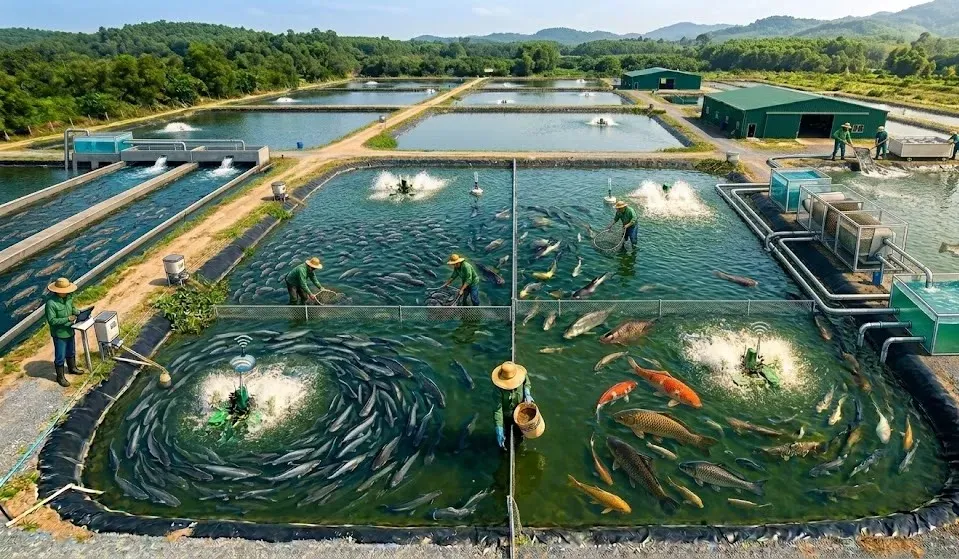
- High-Protein Diet: Use high-protein feed (40–50%) for faster growth. It supports strong muscle development in fish. Add balanced nutrients like amino acids and vitamins.
- Live and Natural Feed: Use brine shrimp, blackworms, and daphnia. These foods improve appetite and growth speed. They also support natural feeding behavior.
- Small and Frequent Meals: Feed fish 2–3 times daily. Small meals improve digestion and reduce waste. Avoid overfeeding in each session.
- Proper Feeding Amount: Follow the 5-minute rule. Fish should finish food within 3–5 minutes.
- Uneaten food reduces water quality.
- Water Quality Control: Perform regular water changes. Clean water improves oxygen and growth. High waste slows fish development.
- Temperature Management: Keep water in the optimal warm range. Warm water improves metabolism and feeding rate.
- Oxygen Management: Maintain strong aeration in ponds. High oxygen supports faster digestion and growth.
- Stress Reduction: Provide stable and clean environments. Less stress improves feeding behavior.
- Species-Based Feeding: Carnivores need high protein diets. Omnivores need balanced feed types. Juveniles require more frequent feeding than adults.
- Consistent Feeding Schedule: Feed at the same time daily.Fish learn the routine and eat better.
Ideal Water Conditions for Rapid Fish Growth
Ideal water conditions play a key role in fast fish growth in aquaculture ponds. Warm water around 25–32°C supports better metabolism and feeding. High dissolved oxygen (DO) keeps fish active and improves growth, while low oxygen slows them down.
A stable pH level (6.5–8.5) helps digestion and overall health. Low ammonia and nitrite levels are very important because high levels cause stress and reduce growth. Clean water through filtration and regular water changes removes waste and supports better survival.
Balanced stocking density prevents overcrowding and ensures enough oxygen for all fish. Proper pond depth and partial shade also help maintain stable conditions. When all these factors stay in control, fish grow faster and healthier in aquaculture systems.
How to Increase Profit with Fast-Growing Fish Species
- Select fast-growing fish like Tilapia, Catfish, Carp, Rainbow Trout, and Barramundi for quick returns.
- Use high-quality fingerlings to reduce growth time and improve survival rates.
- Maintain optimal stocking density to maximize pond space without slowing growth.
- Focus on efficient feed management since feed is the highest production cost.
- Use species-specific, high-protein feed to improve growth and conversion rates.
- Avoid overfeeding to reduce waste and maintain clean water conditions.
- Install automatic feeders for consistent feeding and better growth control.
- Maintain strong water quality with high oxygen levels and stable parameters.
- Use systems like Recirculating Aquaculture Systems (RAS) for higher density and faster production.
- Increase profits through value-added products like fillets, smoked fish, and direct market sale.
Comparing Growth Rates of Popular Aquaculture Fish
| Fish Species | Scientific Name | Growth Rate & Time to Market | Key Features | Farming Advantage |
| African Catfish | Clarias gariepinus | Market size in 3–5 months (500g–1kg) | Extremely fast growth, high survival | Best for intensive high-density farming |
| Pangasius (Basa) | Pangasius hypophthalmus | Market size in 3–5 months under intensive systems | Strong feed efficiency, rapid biomass gain | High production volume & export demand |
| Nile Tilapia | Oreochromis niloticus | Market size in 4–6 months (20g to ~1kg in ~240 days) | Hardy, fast-growing, widely farmed | Best balance of speed & adaptability |
| GIFT Tilapia | Genetically Improved Farmed Tilapia | Faster than normal tilapia (up to +85% growth improvement) | Selectively bred high-performance strain | Higher yield in same farming cycle |
| Carp (Grass/Silver/Common) | Cyprinus carpio spp. | Moderate-fast, steady growth in pond systems | Uses natural pond food efficiently | Low-cost farming with stable output |
| Rainbow Trout | Oncorhynchus mykiss | Fast growth in cold water systems (high-value fish) | Requires oxygen-rich water | Premium price in cold regions |
| Atlantic Salmon | Salmo salar | Longer cycle (often 1+ year) but high biomass gain | Marine cage farming species | High-value export fish |
Growth Comparison Metrics
| Metric | Meaning | Importance |
| SGR (Specific Growth Rate) | Daily % weight gain | Measures speed of fish growth |
| FCR (Feed Conversion Ratio) | Feed needed per 1kg growth | Lower = more profitable farming |
| Time to Market | Days/months to harvest size | Direct impact on profit cycles |
Sustainable Aquaculture Practices for Fast-Growing Fish
- NOAA Fisheries (.gov): Aquaculture boosts seafood supply and supports food security through sustainable fish farming.
- World Resources Institute: RAS systems recycle water and support fast-growing fish like tilapia and catfish with low environmental impact.
- Seafood Watch: Sustainable feed reduces wild fish use; plant, insect, and algae feeds improve growth.
- Columbia University: IMTA systems recycle fish waste using shellfish and seaweed, improving water quality.
- World Resources Institute: Low-trophic fish like tilapia and carp are best for sustainable high-density farming.
- Advanced Biotech (ASC): Strong biosecurity and disease control ensure healthy, fast-growing fish stocks.
- The Ocean Foundation: Proper site selection improves water quality and reduces environmental stress.
- USDA (.gov): RAS and controlled systems reduce pollution and improve production efficiency.
- Fish Farm Feeder: Waste and feed management improve water quality and growth performance.
- FAO: Sustainable aquaculture is the fastest-growing food sector requiring eco-friendly practices.
Conclusion
Choosing the best fast-growing fish species like Tilapia, Catfish, Pangasius, Carp, and Barramundi is the foundation of successful aquaculture farming. According to FAO (Food and Agriculture Organization), these species are widely used in global aquaculture because they grow quickly, adapt easily, and support high production yields in pond systems.
Research from the World Resources Institute also shows that fast-growing species perform best when combined with proper feed, water quality, and sustainable management practices, ensuring higher profits and faster harvest cycles.
In simple terms, farmers succeed when they select fish that grow fast, survive well in local conditions, and convert feed efficiently into body weight. This balance leads to better production, lower risk, and stronger profitability in aquaculture ponds.
FAQs
1. Which fish grows the fastest in aquaculture ponds?
Tilapia, African catfish, and pangasius are among the fastest-growing fish in ponds, reaching market size in a few months under good conditions.
2. What is the best fish for beginners in aquaculture?
Tilapia is the best choice for beginners because it is hardy, easy to manage, and adapts to different water conditions.
3. How long does it take for fish to grow in ponds?
Most fast-growing species like tilapia and catfish reach harvest size in about 4–8 months, depending on feed and water quality.
4. Which fish is most profitable for aquaculture farming?
Catfish, tilapia, salmon, trout, and carp are considered highly profitable due to strong demand and fast production cycles.
5. What are the ideal conditions for fast fish growth?
Fast growth requires warm water, high oxygen, good-quality feed, proper stocking density, and clean water management for healthy metabolism and fast weight gain.